- Rental profit is taxed in Ireland at 20% or 40% income tax, plus USC and Class S PRSI (blended 4.2375% for 2026)
- Allowable expenses (mortgage interest, repairs, insurance, wear and tear) reduce your taxable profit before any tax is calculated
- You must declare rental income each year via a Form 11 self-assessment return, filed with Revenue by 31 October
If you own a rental property in Ireland, Revenue expects you to declare every euro of rent you receive. But here is the good news: you are not taxed on the full rent. You are taxed on your net rental profit after deducting allowable expenses. For many landlords, those deductions make a significant difference to the final bill.
This guide explains exactly how rental income tax works in Ireland in 2026, what you can and cannot deduct, and what you need to do each year to stay on the right side of Revenue.
How Is Rental Income Taxed in Ireland in 2026?
Rental profit in Ireland is added to your other income and taxed at your marginal income tax rate. For 2026, you pay 20% on income up to €44,000 (if you are single) and 40% on amounts above that. You also pay USC and PRSI on top of income tax.
The critical point is that you are not taxed on your gross rent. Revenue taxes your net rental profit: that is your total rent received minus all allowable expenses. The rental income tax rules from Revenue.ie make this clear.
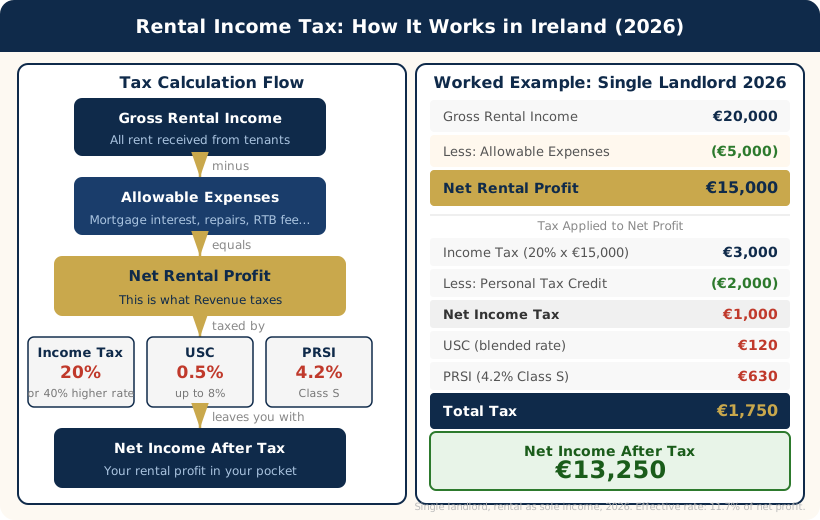
Here is how the calculation works at a high level:
- Add up all rent received (gross rental income)
- Subtract allowable expenses (mortgage interest, repairs, insurance, and more)
- The result is your net rental profit
- That profit is then subject to income tax, USC, and PRSI
If you want to estimate your rental tax bill quickly, our rental income tax calculator walks through the full calculation for your own figures.
What Expenses Can Landlords Deduct from Rental Income?
Allowable expenses reduce your taxable profit before any tax is applied. This is one of the most important areas for landlords to get right because missing a deduction means overpaying tax.
According to Revenue.ie, the following expenses are fully deductible against rental income in 2026:
Mortgage interest: 100% of the mortgage interest on your rental property is deductible, provided the tenancy is registered with the Residential Tenancies Board (RTB). This full relief was restored in September 2024 (see the mortgage interest section below).
Repairs and maintenance: Genuine repairs (fixing a broken boiler, repainting, replacing a broken window) are fully deductible. Note that improvements or upgrades are treated differently: they may qualify for wear and tear allowances instead.
Wear and tear on furnishings: You can claim 12.5% of the cost of furniture and fittings each year for 8 years. So if you bought a fridge for €800, you can deduct €100 per year for 8 years.
Insurance premiums: Building and contents insurance for the rental property is deductible.
Management and letting agent fees: Fees paid to a property management company or letting agent are fully deductible.
RTB registration fee: The mandatory Residential Tenancies Board registration fee of €90 per tenancy is deductible. Registering with the RTB is also a legal requirement and a condition of claiming mortgage interest relief.
Advertising costs: Costs of advertising the property to find tenants are deductible.
Accountancy and legal fees: Fees for professional advice related to the rental property (such as tax preparation) are deductible.
What you cannot deduct: Your own time, capital improvements to the property, pre-letting expenses in most cases, and any expenses relating to private use of the property.
Do You Pay USC on Rental Income in Ireland?
Yes. USC (Universal Social Charge) applies to rental profit at the same rates as employment income. For 2026, the USC rates from Revenue.ie are:
| USC Band | Rate |
|---|---|
| First €12,012 | 0.5% |
| €12,012 to €28,700 | 2% |
| €28,700 to €70,044 | 3% |
| Above €70,044 | 8% |
If your total income (including rental profit) is €13,000 or less in 2026, you are exempt from USC entirely.
For most landlords, the USC on rental income alone is modest. On a net rental profit of €15,000, the USC works out at around €120 per year. But if your rental profit pushes your total income above €70,044, the 8% rate kicks in on the excess.
PRSI on Rental Income: What You Need to Know
PRSI (Pay Related Social Insurance) applies to rental income, but the rules differ depending on whether you also have PAYE employment.
If rental income is your only income: You are a Class S contributor. PRSI is charged on your net rental profit at the blended 2026 rate of 4.2375%, with a minimum annual charge of €650.
If you also have a PAYE job: Your rental income is subject to Class K PRSI at the same rate. This is paid through your self-assessment return each year. There is no minimum charge for Class K.
One important note: Class K PRSI does not count as insurable employment for the purpose of social welfare benefits such as Jobseeker's Benefit or the State Pension (Contributory). Your PAYE contributions from your employment do count.
Mortgage Interest Relief: What Changed for Landlords?
For many years, landlords in Ireland could only deduct 75% or 80% of their mortgage interest. That changed in September 2024.
Since September 2024, residential landlords can deduct 100% of mortgage interest on rental properties, provided the tenancy is registered with the RTB. This is a significant saving for landlords who are still paying down a mortgage.
For example, if your annual mortgage interest is €6,000, you can now deduct the full €6,000 from your rental income. Previously, at 75% relief, you could only have deducted €4,500.
Important: You cannot claim mortgage interest relief at all if the tenancy is not registered with the RTB. Registration is a legal requirement under the Residential Tenancies Act and it is also the gateway to this tax relief. You can register a tenancy at rtb.ie.
Worked Example: Single Landlord, €20,000 Gross Rent (2026)
Let's work through a realistic example. Assume a single person with no other income rents out a property at €20,000 per year and incurs €5,000 in allowable expenses.
| Amount | |
|---|---|
| Gross Rental Income | €20,000 |
| Less: Allowable Expenses | (€5,000) |
| Net Rental Profit | €15,000 |
| Income Tax (20% on €15,000) | €3,000 |
| Less: Personal Tax Credit | (€2,000) |
| Net Income Tax | €1,000 |
| USC (0.5% on €12,012 + 2% on €2,988) | €120 |
| PRSI (4.2375% Class S on €15,000) | €636 |
| Total Tax | €1,756 |
| Net Income After Tax | €13,244 |
The effective tax rate on the net rental profit is 11.7%. Note that this example assumes rental income is the landlord's only income and that no PAYE tax credit applies (that credit is for PAYE workers only). A single person with a PAYE salary would have their rental profit taxed on top of their employment income, likely at 40%.
Use our rental income tax calculator to run the numbers for your own situation, including your mortgage interest, other allowable expenses, and any other income.
What Happens If Your Rental Expenses Exceed Your Income?
If your allowable expenses are greater than your rental income in any year, you have a rental loss.
Rental losses in Ireland carry forward. You can offset them against future rental profits from the same property or other rental properties. What you cannot do is use a rental loss to reduce your PAYE income or other non-rental income.
For example: if you had a rental loss of €2,000 in 2025 and a rental profit of €5,000 in 2026, you would only pay tax on €3,000 in 2026.
Keep detailed records of all losses, because Revenue will ask you to show the figures if you are audited.
How to Declare Rental Income to Revenue in Ireland
All rental income must be declared to Revenue each year through self-assessment. This applies even if you also have a PAYE job where your employer deducts tax automatically.
Here is what you need to do:
Step 1: Register for self-assessment. If this is your first year as a landlord, register with Revenue through myAccount or ROS. Do this as soon as you start receiving rental income.
Step 2: Keep records. Hold onto all rental income records and expense receipts for at least six years. Revenue can audit any year within that window.
Step 3: File Form 11 by 31 October. The annual pay and file deadline for self-assessment is 31 October (or mid-November if you file and pay via ROS). The Form 11 covers the previous tax year.
Step 4: Pay Preliminary Tax. For most landlords, you must also pay Preliminary Tax each year, which is an advance payment towards the current year's liability. The amount is typically 90% of your expected current year tax or 100% of your prior year tax liability.
If this is your first time filing a self-assessment return, our guide to how to file Form 11 walks through the process step by step. The freelancer and self-employed tax guide also covers the self-assessment system in detail.
Key Takeaways and Next Steps
Rental income tax in Ireland is manageable once you understand the framework. Your taxable profit is what's left after allowable expenses, and those deductions (especially 100% mortgage interest relief) can significantly reduce your bill.
The three key things to take away from this guide:
- Track every allowable expense throughout the year. Missing deductions is the most common way landlords overpay.
- Register with the RTB if you haven't already. It is the legal requirement and unlocks full mortgage interest relief.
- File on time. Late filing attracts surcharges of 5% (up to €12,695) or 10% (up to €63,485) of the tax owed.
To estimate your own rental tax bill using your actual figures, try our rental income tax calculator. It handles income tax, USC, PRSI, and all common expense deductions in one place.
Frequently Asked Questions
How much tax do I pay on rental income in Ireland in 2026?
Rental profit is taxed at 20% up to the standard rate band (€44,000 for a single person) and 40% above that. On top of income tax, you also pay USC at rates from 0.5% to 8% and Class S PRSI at the blended 2026 rate of 4.2375%. The amount depends on your total income and allowable expenses for the year.
What expenses can landlords deduct from rental income in Ireland?
You can deduct mortgage interest (100% for RTB-registered tenancies), property insurance, repairs and maintenance, management fees, the RTB registration fee (€90), advertising costs, accountancy fees, and wear and tear on furnishings at 12.5% per year over 8 years. Capital improvements do not qualify as a deduction but may be relevant for Capital Gains Tax when you sell.
Do landlords pay USC on rental income in Ireland?
Yes. USC applies to rental profit at rates from 0.5% to 8% depending on your total income. If your total income including rental profit is €13,000 or less, you are exempt. USC is paid through your annual self-assessment return, not through PAYE.
Is mortgage interest tax-deductible for Irish landlords in 2026?
Yes, 100% of mortgage interest is deductible for residential landlords with RTB-registered tenancies. This full relief was restored in September 2024. If the tenancy is not registered with the RTB, you cannot claim any mortgage interest deduction at all.
What PRSI do landlords pay on rental income in Ireland?
If rental is your sole income, Class S PRSI applies at the blended 2026 rate of 4.2375% with a minimum annual charge of €650. If you also have a PAYE job, Class K PRSI applies to the rental profit instead, at the same rate and with no minimum. Class K contributions do not count towards social welfare benefit entitlements.
What happens if my rental expenses are more than my rental income?
You have a rental loss. That loss carries forward to offset future rental profits from any Irish rental property you own. You cannot use a rental loss to reduce your PAYE salary or other non-rental income. Keep all records because Revenue may ask you to substantiate prior losses.
How do I declare rental income to Revenue in Ireland?
You file a Form 11 self-assessment return each year by 31 October (or mid-November via ROS). If this is your first year as a landlord, register for self-assessment through myAccount or ROS as soon as you start receiving rent. You will also need to pay Preliminary Tax each year, which is an advance payment towards your current year liability.
This article is for informational and estimation purposes only. It does not constitute professional tax advice. Tax rules can change. Always check Revenue.ie for the latest figures or consult a qualified tax advisor for your specific situation.
Written by a Chartered Accountant
All guides on Irish Tax Estimator are written and reviewed by a qualified Irish Chartered Accountant to ensure accuracy. This article is for general information only and does not constitute professional tax advice.
Share this guide